Key takeaways
- Up-firing drivers depend entirely on the ceiling to work, firing sound upward at roughly 30 to 45 degrees and relying on a flat, hard surface to reflect it back down to the seat.
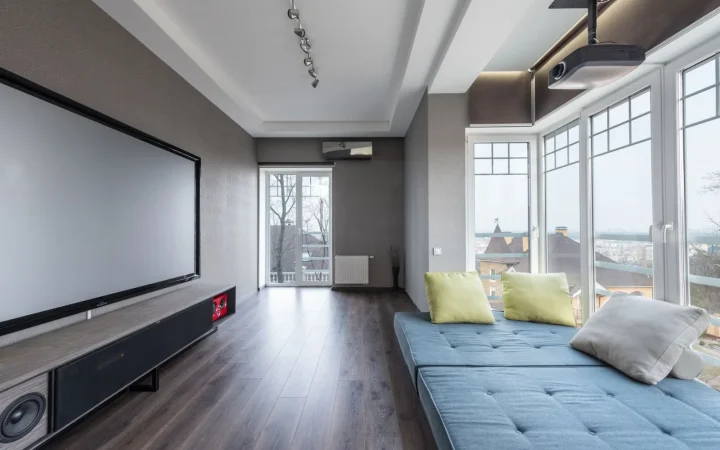
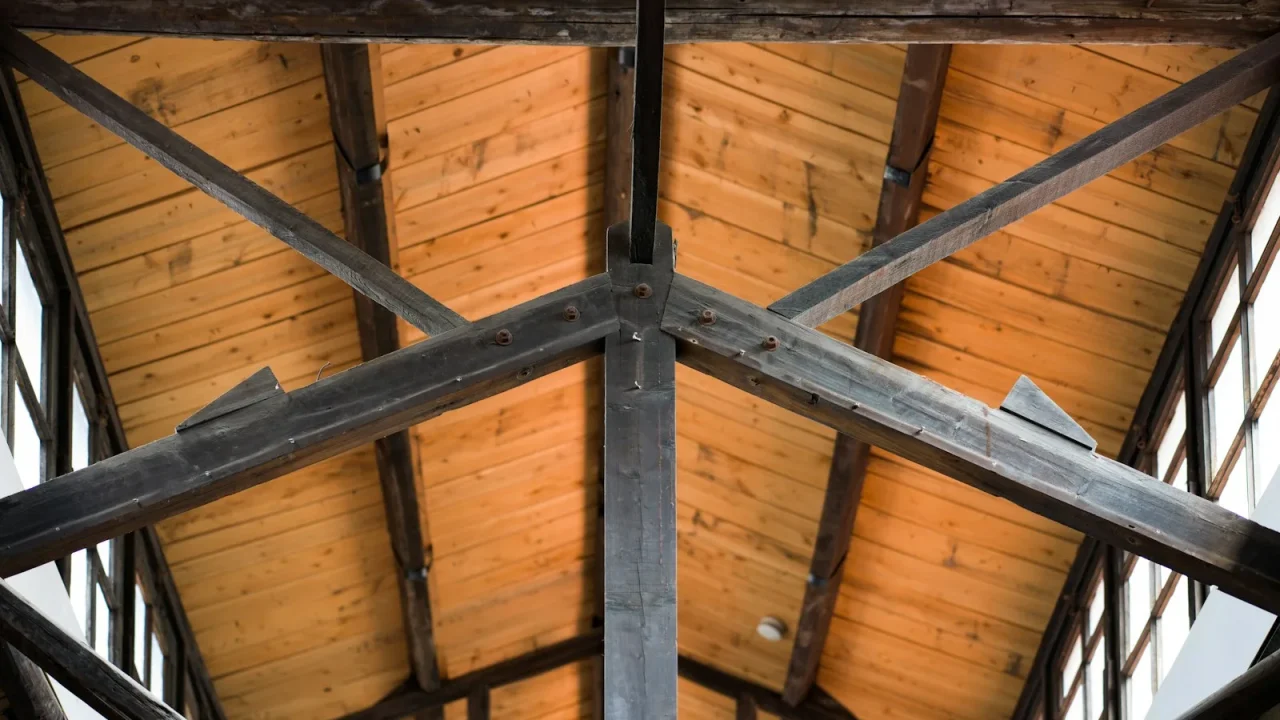
- A ceiling between about 2.4 and 2.7 metres gives the strongest, most convincing height effect. Ceilings above roughly 3.4 metres or covered in exposed beams or heavy texture lose most of it.
- Measured with a calibration microphone, a poor ceiling can read 3 to 6 dB weaker on the height channels than a good one, using identical speaker settings.
- The costly mistake is buying a premium height heavy package before checking the ceiling, not misunderstanding what height channels are supposed to do.
- Real in ceiling speakers sidestep the reflection problem entirely by firing straight down, which is why they remain the more reliable option in a difficult room.
A client in a converted loft called me back four months after I installed his new soundbar, convinced the height channels had stopped working. The soundbar was fine. His landlord had repainted that spring and switched the ceiling to a heavy textured finish, and the up-firing drivers suddenly had nothing clean left to bounce off.
Nothing about the electronics changed. The physical surface a couple of metres above his sofa did, and that alone was enough to take a genuinely good Atmos setup and make it sound like a plain 5.1 system again.
What the ceiling is actually doing in an Atmos setup
An up-firing driver does not aim sound at a listener directly. It fires upward at an angle, typically somewhere around 30 to 45 degrees from vertical depending on the model, and relies on the ceiling to reflect that sound back down toward the seating position, an approach Dolby’s own overview of the format assumes throughout. The ceiling is functioning as a mirror for sound, and like any mirror, its surface quality determines how clean the reflection is.
Real ceiling speakers, wired into a receiver and mounted flush with the ceiling itself, skip this step by firing straight down. That is the core structural difference between the two approaches covered in Atmos on a soundbar versus real ceiling speakers, and it is why one depends so heavily on a specific physical surface while the other does not.
None of this is specific to Dolby’s own format. DTS:X renders height the same way, as objects placed through up-firing or ceiling mounted speakers, so a receiver switched between the two is decoding different metadata off the identical physical reflection. The menu steps that differ for DTS:X on the same hardware are covered in walking through DTS:X’s own setup correctly.
Why height and flatness both matter to the physics
Distance affects timing and level together. A ceiling around 2.4 to 2.7 metres up gives a short, strong reflection that arrives close enough behind the direct sound to read as one clear overhead source rather than two separate ones. Push that same ceiling out to 3.4 or 3.7 metres, common in converted lofts and some new build living rooms, and the reflected sound loses several decibels of level to distance and arrives late enough to smear rather than sharpen the effect.
Flatness matters independently of height. A hard, smooth, painted plaster surface reflects sound coherently, all of it bouncing back along a predictable path. A heavily textured finish, exposed beams, or a suspended acoustic tile ceiling scatters that same sound in many directions at once, so only a fraction of it ever reaches the listener as a clean overhead cue, regardless of how close that ceiling actually is.
The two factors compound rather than simply adding together. A ceiling that is both high and textured, a 3.4 metre exposed beam vault for example, loses level to distance and coherence to scattering at the same time, which is why height channels in converted lofts and barn conversions so often disappoint compared with the same soundbar in an ordinary suburban living room with a flat 2.5 metre ceiling.
A calibration microphone run through a receiver’s automatic room correction, such as Audyssey or Dirac on a Denon AVR-X1800H, will often show height channels arriving 3 to 6 dB weaker on a poor ceiling than on a good one, using identical speaker settings.
What changed when the same soundbar met a different ceiling
I measured the same soundbar, a Samsung HW-Q990D, in two rooms four weeks apart for a single client who was moving house. In the old flat, a 2.5 metre flat plaster ceiling, the height layer was clearly audible on an Atmos demo scene, aircraft passing distinctly overhead. In the new house, a 3.2 metre vaulted ceiling with exposed timber, the identical scene sounded noticeably flatter, the overhead cue reduced to a vague sense of extra width rather than genuine height.
Both rooms used the same speaker distance and level settings, run through the soundbar’s own automatic calibration routine each time, so the difference was not a setup error carried over from the first install. It was the ceiling doing measurably less work, confirmed afterward with a handheld sound level meter held at the seating position during the same test scene in both rooms.
Nothing about the electronics moved between those two rooms. The single variable was the ceiling, and it was enough to change a client’s opinion of the same soundbar, priced around $1,400, from impressed to unconvinced. Room calibration microphones and whether they actually help covers how to measure this properly rather than relying on impression alone.
Buying height channels before checking what is overhead
The expensive mistake is not misjudging what height channels do. It is buying a premium height heavy package, a 7.1.4 setup easily running $1,200 to $2,000, for a room whose ceiling was never going to deliver on it, without checking the ceiling first. A textured ceiling or a fitted ceiling fan directly over the main seating position can flatten a height layer almost completely no matter how many channels are paid for.
The reverse mistake happens too: someone with an ideal flat 2.5 metre ceiling settles for a basic soundbar with no height channels at all because nobody explained that their specific room was exactly the kind of space the format was built for. Matching the format to the ceiling, rather than to the price tag on the box, is most of what separates a setup that earns its cost from one that quietly does not.
Renters face a version of this that owners do not: a favorable ceiling can change without warning if a landlord repaints or reboards between tenancies, which is exactly what happened to the loft client mentioned earlier. There is no fix for that beyond checking again after any change and adjusting expectations, or the equipment, accordingly. Owners have more control, but the same logic applies to any planned repaint, a new ceiling fan, or acoustic tiles added for an unrelated reason: each one is a small renovation decision with a direct, measurable effect on a height channel that nobody thinks to connect to the ceiling at all.
Measure your ceiling height and look directly upward at its surface before buying anything with height channels. A tape measure and five minutes of attention prevents more disappointment than any amount of extra research into speaker specifications.
What to check before signing a lease or starting a renovation
Anyone shopping for a soundbar with height channels, or planning a home theater room from scratch, gets more value from five minutes with a tape measure than from another hour reading spec sheets. Ceiling height and surface decide more of the outcome than any speaker choice will.
- Measure ceiling height directly above the main seating position, not just at the room’s tallest point
- Look up and note the surface: flat plaster, textured, exposed beam, or acoustic tile
- Check for a ceiling fan, pendant light, or beam directly above the seat
- If renovating, ask whether a flat section can be left over the seating area even if the rest of the ceiling is vaulted
- If a wall or ceiling is already open for other work, price real ceiling speakers before defaulting to up-firing ones
- Ask a landlord or building manager before assuming any ceiling change, texture, tiles, or a new fan, is temporary or reversible
None of this takes long, and all of it is cheaper to do before buying than after returning a soundbar that was never actually broken. For readers still deciding whether the format is worth the premium at all in an average room, is Dolby Atmos worth it in a normal room puts a number on that decision. For the mechanical question of whether up-firing drivers specifically can overcome a difficult ceiling, do up-firing Atmos speakers actually work goes further into the borderline cases, and Atmos speaker layouts from 5.1.2 to 7.1.4 covers how the height channel count itself changes with layout choice.
Questions readers ask about this
Yes, substantially. Up-firing speakers rely on reflecting sound off the ceiling to create a sense of height, so the distance and surface of that ceiling directly affects how convincing the overhead layer sounds. A ceiling around 2.4 to 2.7 metres up generally works best.
Measure the height directly above your main seating position with a tape measure, then look up and note the surface. Flat painted plaster between about 2.4 and 2.7 metres is close to ideal. Anything textured, beamed, or above roughly 3.4 metres will noticeably weaken the effect.
The reflected sound has further to travel and often strikes an angled surface unevenly, which scatters it rather than bouncing it cleanly back to the seat. Height channels in vaulted rooms typically sound present but noticeably less precise than in a flat, low ceiling room.
Before. It takes five minutes and directly affects whether height channels are worth paying extra for at all. Checking afterward usually means returning a soundbar that was never actually faulty, just mismatched to a ceiling that could not use it.
Yes. Running a receiver's automatic room correction, such as Audyssey or Dirac, will typically show height channel levels several decibels weaker on a poor ceiling than expected, even with identical speaker distance and level settings, which is a reliable way to confirm the problem.

About the author
Rahul Gupta
Rahul Gupta has spent nearly a decade quietly wiring living rooms, testing soundbars in every awkward apartment layout imaginable, and untangling the kind of HDMI handshake problems that make people give up on Atmos altogether. He writes here about what actually works when you get the boxes home—not what the spec sheet promises. If a piece of gear on this site earns a recommendation, it earned it in a real room with real furniture, not a lab.