Key takeaways
- A title needs an actual Atmos mix, platform support on your plan and device, and passthrough set correctly on your TV, all three, before you hear anything different from 5.1.
- Disc based Atmos on 4K Blu-ray is lossless Dolby TrueHD, while streaming Atmos is lossy Dolby Digital Plus, so the same title can sound noticeably bigger on disc than on a streaming app.
- Netflix commonly gates Atmos behind its Premium plan tier, so a lower tier account will not show it as an option even on a compatible device.
- Big budget action and superhero releases have carried Atmos mixes close to standard since around 2015, while independent film, older catalogue titles, and live sport mostly have not.
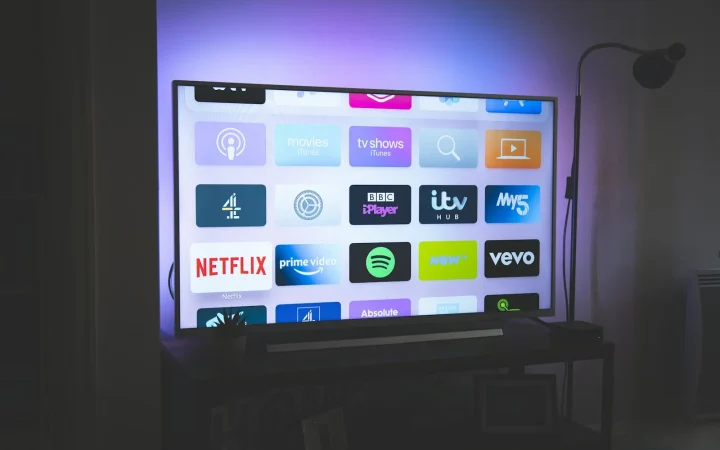
- The audio menu inside the specific title you are watching is the only reliable way to confirm Atmos is present, not the platform's browse grid thumbnail.
This is a reference, not a review. Use it to check whether a platform, disc format, or device you already own is likely to deliver Dolby Atmos before you buy or subscribe expecting it, and to understand why two titles that both list Atmos on the info screen can sound different in your room.
The short version: Atmos availability depends on three things stacking together correctly. The title itself needs an Atmos mix, the platform delivering it needs to support Atmos on your specific plan and device, and your own hardware chain, TV, soundbar or receiver, and the cable between them, needs to pass it through intact. If you are unsure what Atmos actually changes acoustically before checking whether a title has it, Dolby Atmos explained for home theater covers the format itself.
How to tell if a title actually has an Atmos mix
On disc, look for ‘Dolby Atmos’ printed on the 4K Ultra HD Blu-ray case itself, not just Dolby Digital or DTS-HD Master Audio. Most major studio 4K UHD releases since around 2016 carry Atmos as the default lossless track, delivered as Dolby TrueHD with embedded object data.
On a streaming app, the audio and subtitles menu inside the title itself lists Dolby Atmos as a selectable or automatic option when it is available, usually alongside a 5.1 or stereo fallback. If Atmos is not listed there for that specific title, no setting on your TV or soundbar will produce it, since the mix simply was not made.
What each major streaming platform actually supports
| Platform | Atmos requirement | Typical coverage |
|---|---|---|
| Netflix | Premium plan plus a compatible app or device | Selected original films and shows, growing each year |
| Disney Plus | Compatible app or device, no separate plan tier | Most Marvel, Star Wars, and Pixar titles, many library films |
| Prime Video | Compatible device, Atmos flagged on the title page | Growing but inconsistent, varies title to title |
| Apple TV Plus | Apple TV 4K or a compatible smart TV app | Nearly all original content mixed in Atmos as standard |
For the device side of that requirement in more depth, getting Atmos from Netflix and Disney Plus audio quality and settings both cover the specific settings menus involved. Coverage figures shift as platforms add titles, so treat this table as a snapshot rather than a permanent list.
Devices that actually pass the signal through
A streaming stick or smart TV app being on the supported list matters as much as the platform itself. Apple TV 4K, a Chromecast with Google TV, an Nvidia Shield TV, and current generation Fire TV Stick 4K models generally support Atmos passthrough to a compatible soundbar or receiver. Older or budget streaming sticks, even ones running the same apps, frequently cap out at stereo or plain 5.1 regardless of what the app itself offers.
A customer once called me out convinced their Samsung HW-Q990D had stopped decoding Atmos from Prime Video entirely, since the badge showed on screen but the soundbar’s own display never lit up with Atmos during playback. The fault was a hand me down basic Fire TV Stick, several generations old, plugged into a spare HDMI port. Swapping it for a Fire TV Stick 4K Max fixed it in under ten minutes, with no change to the soundbar or the app at all.
Disc, streaming, and the gap between them
A 4K Blu-ray’s Atmos track is Dolby TrueHD, lossless, typically running at several Mbps depending on the mix, and it needs HDMI eARC to reach a soundbar untouched from most 4K players and consoles. Streaming Atmos is Dolby Digital Plus, lossy, compressed down to a fraction of that bitrate to fit a home internet connection, and it only needs HDMI ARC, not eARC, to arrive intact. Why streaming Atmos is not Blu-ray Atmos covers this gap on its own.
Both are legitimately Dolby Atmos, a point Dolby’s own documentation is clear about even though the practical result in your room differs. Neither is fake. But a scene that sounds enormous on a UHD disc can sound noticeably smaller from the same title’s streaming version, and that is the compression talking, not a fault in your system.
Genres and eras where Atmos is common versus rare
Big budget action, superhero, and science fiction releases have carried Atmos mixes as close to standard since around 2015, when the format moved from a handful of flagship cinemas into mainstream theatrical and home release. Gravity, released in 2013, was among the first wide releases mixed in Atmos and is still used as a reference disc by installers, myself included. Animated releases from major studios have also carried Atmos close to consistently since the mid 2010s, since the mix budget for a fully synthetic soundtrack rarely runs into the same constraints a live action shoot does.
Games are a separate case again. Current generation consoles decode Dolby Atmos for a soundbar or receiver connected over HDMI, but only a portion of the game library actually ships with an Atmos mix rather than a standard stereo or 5.1 track upmixed on the fly, so checking a specific title’s own audio settings menu applies here too, not just to films.
Older catalogue titles, anything mixed before Atmos existed, generally only get an Atmos track if the studio pays for a new remix rather than a straight port of the original 5.1 or stereo mix. Independent films and older television seasons still mostly ship in plain stereo or 5.1. Atmos is not limited to film and television either. Music mixed in the format is covered separately in Atmos music, what it is and where to hear it, since album and track availability follows entirely different platforms and rules.
Reading the info screen without getting misled
A title marked Atmos in a platform’s browse grid is describing the platform’s typical output for that show, not a guarantee for every episode or every region. Some multi season shows only carry Atmos from a certain season onward, once the studio started mixing that way partway through production.
Region and licensing also affect this. The same title can list Atmos in one country’s version of a platform and only 5.1 in another, depending on what rights and masters were delivered locally.
If a title plays in 5.1 or stereo when you expected Atmos, check the info or audio menu inside the player first. It is the most reliable source, more reliable than the browse grid thumbnail or a general search result.
A second, quieter cause is regional server routing. Some platforms serve a lower bitrate or stereo only stream to a connection judged too slow for a full Atmos package, even on a title and device that both support it. This is uncommon on a typical home broadband connection above about 25 Mbps, but worth ruling out if Atmos disappears specifically during peak evening hours and returns later at night.
- Check the title’s own audio menu, not just the platform browse grid
- Confirm your plan tier supports Atmos, since some platforms gate it behind a premium tier
- Confirm your device is on the platform’s supported list
- Set your TV or source to bitstream or passthrough, not PCM
None of this requires guessing. Between the disc case, the in app audio menu, and the platform’s own device compatibility page, the answer to whether a specific title on a specific device will actually deliver Atmos tonight is almost always available before you press play, not after.
Questions readers ask about this
No. Most major studio 4K Ultra HD releases from around 2016 onward default to an Atmos track, but catalogue reissues and smaller studio releases sometimes carry only Dolby TrueHD 7.1 or DTS-HD Master Audio without object data. Check the disc case or the audio menu inside the player itself rather than assuming Atmos from the format alone.
Atmos on Netflix is usually gated behind the Premium plan tier, so an account on a lower tier will not see it as an audio option even on a title that has an Atmos mix. Device compatibility adds a second filter on top of the plan tier, so both need to line up before it appears.
Sometimes, when a studio judges the catalogue title valuable enough to justify a new mix, usually timed to a 4K Ultra HD Blu-ray reissue or a major streaming push. Most catalogue titles are not remixed and continue to ship in whatever format, often plain 5.1 or stereo, they were originally mixed in decades ago.
Not necessarily. Some long running shows only began mixing in Atmos partway through production, often when a platform or studio adopted the format part way through a series. Check each season individually in the audio menu rather than assuming consistency across an entire show's catalogue of episodes.
Rarely, and where it does the effect is usually limited to crowd ambience rather than a full object based mix, since live broadcast mixing on a moving deadline does not suit the same workflow as a film's post production sound mix. Most live sport, even on premium sports packages, still arrives in 5.1 or stereo.

About the author
Rahul Gupta
Rahul Gupta has spent nearly a decade quietly wiring living rooms, testing soundbars in every awkward apartment layout imaginable, and untangling the kind of HDMI handshake problems that make people give up on Atmos altogether. He writes here about what actually works when you get the boxes home—not what the spec sheet promises. If a piece of gear on this site earns a recommendation, it earned it in a real room with real furniture, not a lab.