Key takeaways
- Dolby Atmos earns its 150 to 300 USD premium mainly in rooms with a flat ceiling between about 2.3 and 3 metres (7.5 to 10 ft) high.
- Sloped ceilings, open plan layouts, and heavy soft furnishings absorb or scatter the reflected sound up firing drivers depend on, cutting the effect close to nothing.
- The .2 or .4 on a soundbar's spec sheet counts height channels, not subwoofers, a mix up that leads buyers to expect the wrong thing.
- Streaming Atmos runs on lossy Dolby Digital Plus over HDMI ARC, while disc based Atmos runs on lossless Dolby TrueHD and needs eARC, so the two are not the same experience despite sharing a name.
- A bitstream or passthrough setting on the source matters as much as the hardware, since PCM output usually strips the object metadata before it reaches the bar.
Every soundbar over 400 USD now carries the words Dolby Atmos on the box, and the price usually climbs 150 to 300 USD the moment it does. The pitch is that sound now arrives from above the screen, not just from the sides, adding a dimension a plain 5.1 system cannot reach. I have installed enough of these in rented flats, box rooms, and proper home cinema conversions to say the claim holds in some rooms and barely survives contact with others.
This is not a takedown and it is not a sales pitch either. It is what actually happens once you separate what the format is built to do from what a given ceiling, sofa, and rug will let it do.
What the format actually does when the room cooperates
Dolby Atmos is object based audio. Instead of mixing sound into fixed channels like left, right, and center, a mix engineer tags each sound with position data, so a helicopter can be placed and moved through three dimensional space rather than locked to one speaker. Dolby’s own technical overview covers the format in more depth than any soundbar’s marketing page will.
On a soundbar, that height information is usually reproduced by up firing drivers angled to bounce sound off a flat ceiling around 2.4 to 2.7 metres (8 to 9 ft) high, arriving at the listener as a reflected sense of overhead sound. For the mechanics of why that works or does not, see whether up firing speakers actually do what the box claims. A full explanation of the format itself sits in Dolby Atmos explained for home theater, and the underlying idea, that a sound is an object rather than a channel, is covered on its own in object based audio in plain English.
Where the ceiling is flat and low enough to reflect sound cleanly, and the room has no open doorway swallowing the reflection, this genuinely works. I have measured a clear rise in overhead energy on an SPL meter in rooms built this way, not just a subjective impression from the sofa.
Higher tier soundbars like the Samsung HW-Q990D or Sony Bravia Theater Bar 9 add a second pair of height drivers at the rear of the cabinet, moving from a 5.1.2 layout to 5.1.4, which extends the overhead cue further back toward a seat set well away from the screen. Entry level Atmos bars, closer to 300 USD, generally carry a single front pair and are honest about it, which is why checking the exact channel count on the box matters more than the word Atmos printed above it.
Where a normal living room defeats it
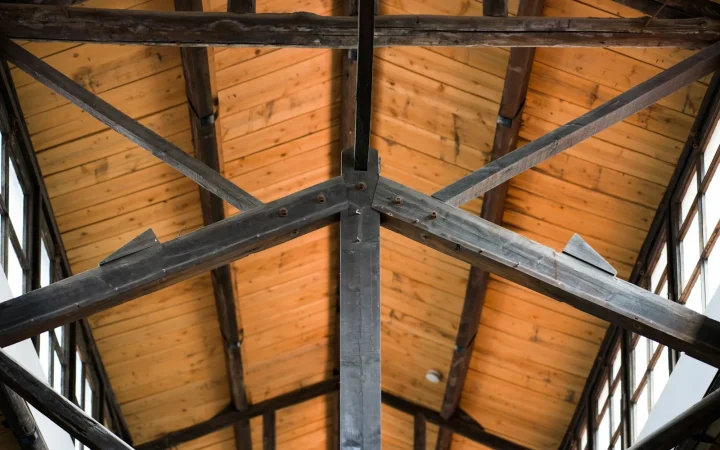
Most living rooms were not built with a soundbar’s up firing drivers in mind. A vaulted or sloped ceiling scatters the reflection instead of bouncing it back down at the seat. An open plan kitchen diner attached to the lounge gives the reflected sound somewhere else to go entirely, which is the single most common reason a customer tells me Atmos ‘doesn’t really do anything’ in their space.
Ceiling height and what actually works covers the numbers in more depth, but the short version is that anything under about 2.3 metres (7.5 ft) starts to feel cramped rather than spacious, and anything over about 3.3 metres (11 ft) or sloped scatters the reflection past usefulness. Thick curtains, a soft rug, and a fabric sofa all absorb the high frequency reflections height effects depend on.
A popcorn or heavily textured ceiling scatters reflections in every direction instead of bouncing them cleanly back down. If yours is like that, put your money toward real ceiling speakers or skip height entirely rather than a soundbar’s up firing pair.
A customer in a 1970s semi detached house called me out over an LG S95TR that ‘wasn’t doing height at all’, with the bar sitting under a boxed in section of sloped ceiling left over from a loft conversion. Moving the sofa about 40 cm forward, out from under the slope and into line with the flatter ceiling nearer the stairwell, recovered a usable overhead cue without touching a single setting on the bar itself. The fault was never the hardware. It was three metres of sloped plasterboard the up firing drivers had no way to work with.
What the spec sheet does not say out loud
A ‘.2’ or ‘.4’ on a soundbar’s spec sheet refers to height channels, not extra subwoofers, and it is worth checking you have not mentally filed it under bass. A 5.1.2 system has five surround channels, one low frequency channel, and two height channels: nothing to do with how many subwoofers ship in the box.
The other detail buried in the fine print: streaming Atmos from Netflix or Disney Plus arrives over Dolby Digital Plus, a lossy codec carried over a standard HDMI ARC connection. Disc based Atmos from a 4K Blu-ray rides on Dolby TrueHD, a lossless codec that needs the extra bandwidth of HDMI eARC to pass through untouched. Both are called Atmos on the box. Neither box tells you which one you are actually going to get most nights, which for most households watching mainly streaming content is the lossy version.
Whether your TV or source is set to bitstream or PCM changes this again, since PCM usually means the object metadata has already been stripped out by the point it reaches the bar. That single setting causes more silent downgrades in a normal household than any piece of hardware does.
Two rooms, two different verdicts
| Room condition | Effect on Atmos | Worth paying for height |
|---|---|---|
| Flat ceiling, 2.4 to 2.7 m (8 to 9 ft), hard seating area | Clean reflection, audible overhead cue | Yes |
| Sloped or vaulted ceiling | Reflection scatters, height cue weak or absent | Rarely |
| Open plan room, no ceiling boundary near the seat | Reflection has nowhere to bounce back from | No |
| Heavy rug, curtains, fabric sofa, low volume viewing | High frequency reflection absorbed before it returns | Marginal |
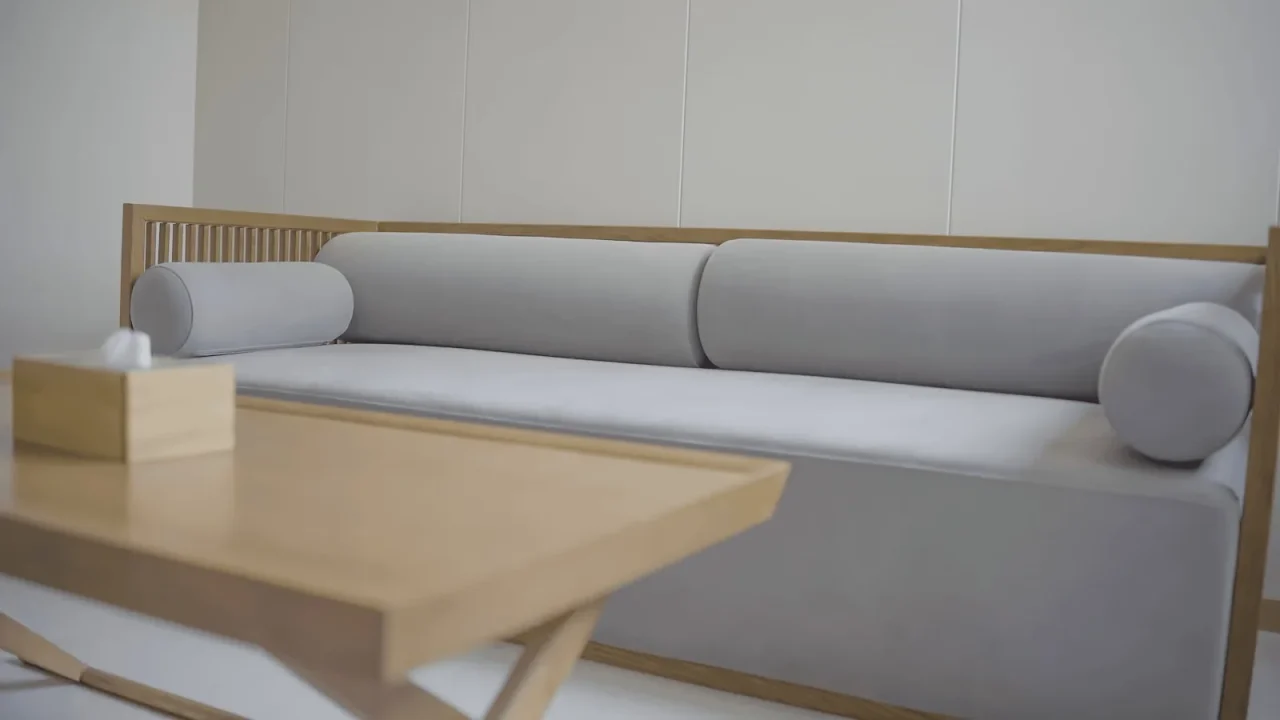
A one bedroom flat with a flat 2.5 metre ceiling and a leather sofa is close to the ideal case, and in that room a 200 USD upgrade from a basic soundbar to one with height channels earns its keep. A converted loft with an exposed sloped ceiling is close to the worst case, and in that room the same money is better spent on a subwoofer or a wider stereo image instead.
For the reader deciding between a soundbar’s version of height and actually paying an installer to run wire to the ceiling, Atmos on a soundbar versus real ceiling speakers lays out that specific trade off in full.
The verdict, and who should skip it
Atmos is worth the extra 150 to 300 USD if your ceiling is flat, sits between roughly 2.3 and 3 metres (7.5 to 10 ft), and your seating position is not fighting an open doorway or a wall of soft furnishing. In that room, height channels add a genuine, measurable sense of space that a same priced 5.1 system does not have.
It is not worth the money if your ceiling slopes, your listening happens mostly at low volume for dialogue heavy shows, or your room opens directly into another space. In that case a better center channel or correct seating, see why your seat position changes everything for the factors that move the needle first, will do more for the money than a height channel nobody in that room will hear properly.
- Measure your ceiling height before buying
- Check whether your ceiling is flat or sloped
- Confirm most of your source material is streamed, not disc based
- Sit in your usual seat and judge, not standing in the shop
I have pulled height modules out of more than one install because the customer’s room was never going to deliver on the promise printed on the box, and put them back into rooms that had no business sounding as good as they did once corrected for ceiling height alone.
Questions readers ask about this
No. Streaming Atmos from Netflix, Disney Plus, or Prime Video rides on Dolby Digital Plus, which needs an HDMI ARC connection at minimum, not optical, since optical tops out at plain Dolby Digital 5.1. eARC only becomes necessary for lossless Dolby TrueHD Atmos from a 4K Blu-ray disc, which needs the extra bandwidth eARC provides.
Anything under about 2.3 metres (7.5 ft) tends to feel enclosed rather than spacious once height channels are added, and the up firing driver's reflection point sits too close to your head to read as overhead. Measure floor to ceiling at your actual seating position, not the doorway, since many rooms vary by several centimetres across the same space.
Generally yes, since .4 means four height channels instead of two, giving front and rear overhead placement instead of just front. It does not mean more subwoofers, a common mix up. Whether the extra pair matters depends on room size, since a small room rarely benefits from four height channels the way a larger one does.
Some modular systems, including higher end Samsung and Sonos setups, allow separate height modules to be added after the fact. Most single bar soundbars do not, since the up firing drivers are built into the main unit's cabinet. Check whether your specific model supports add on satellites before assuming an upgrade path exists.
It creates a wider, slightly more spacious stereo image through psychoacoustic processing, but it is not object based height sound and should not be compared directly to a system with real up firing or ceiling speakers doing the actual work of placing sound overhead.

About the author
Rahul Gupta
Rahul Gupta has spent nearly a decade quietly wiring living rooms, testing soundbars in every awkward apartment layout imaginable, and untangling the kind of HDMI handshake problems that make people give up on Atmos altogether. He writes here about what actually works when you get the boxes home—not what the spec sheet promises. If a piece of gear on this site earns a recommendation, it earned it in a real room with real furniture, not a lab.