Key takeaways
- Weak batteries that still register voltage on a meter are the single most common cause of a soundbar remote failing, and a phone camera can confirm the infrared signal in seconds.
- A blocked line of sight, including strong sunlight aimed directly at the sensor window, causes intermittent failures that look identical to a dying remote.
- HDMI-CEC conflicts between a TV remote and a soundbar's own remote can make the soundbar ignore its own controls, and disabling CEC on the TV usually confirms it.
- RF and Bluetooth remotes can lose their pairing link after a power outage or a factory reset, a fault no amount of battery swapping or aiming will fix.
- If every check clears, the transmitter inside the remote itself has likely failed, and a replacement remote for 20 to 40 USD is worth trying before assuming the soundbar needs service.
The remote worked fine at the end of movie night. The next evening, nothing: no standby light, no volume change, not even the power button doing anything at all. Nine times out of ten the cause is smaller than it feels, and none of it requires a new remote.
A soundbar remote failing is rarely about the remote itself. It is usually the battery, the sensor, a setting fighting for control, or in a smaller number of cases, a link that quietly dropped between two devices that used to talk to each other fine.
Work through these causes in order, from the one that explains almost every dead remote to the ones that only turn up once in a while.
One habit saves time before any of this: note whether the failure is total or partial. A remote that does nothing at all points toward batteries, a blocked sensor, or a stuck button. A remote that only fails at volume control, while power and input switching still work, points more specifically toward a CEC conflict, since that is usually the one function two devices are actually fighting over.
Batteries that read fine on a meter but still fail under load
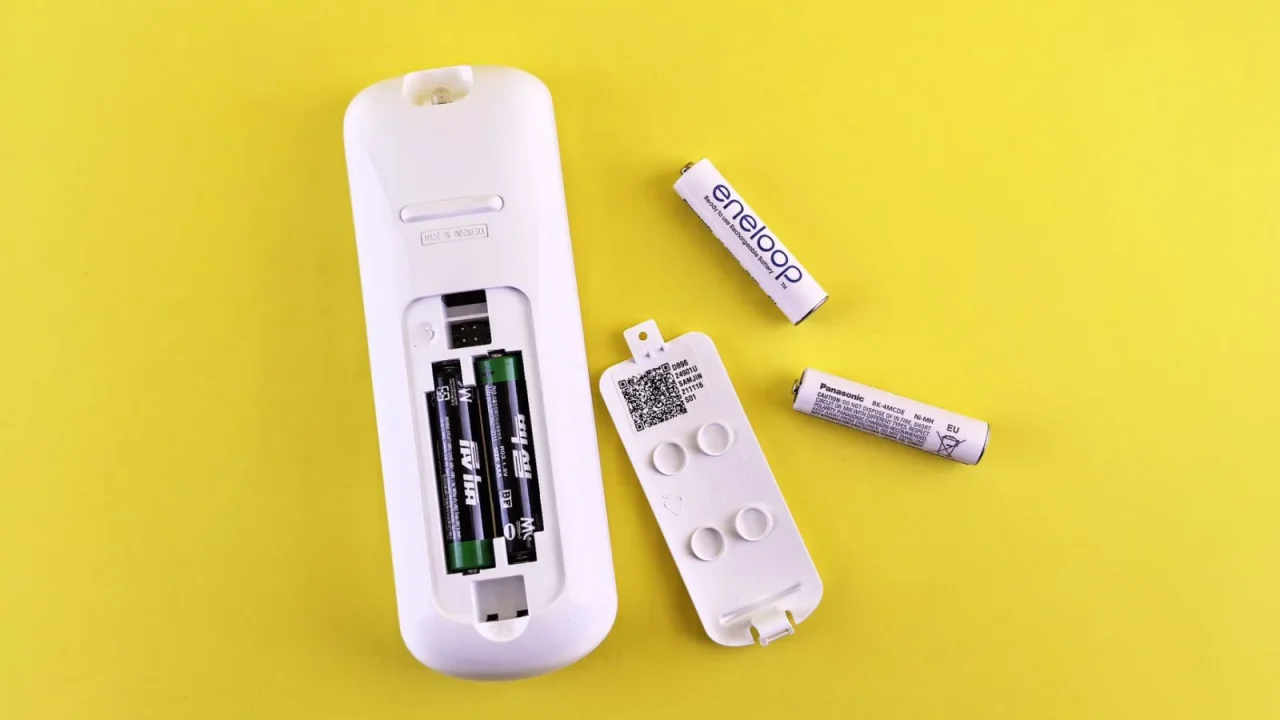
This is the answer more often than anyone expects, including experienced installers. A battery can show close to full voltage on a meter and still fail the moment it needs to deliver a quick pulse of current, which is exactly what an IR remote’s transmitter LED demands with every button press.
Swap in a fresh pair, ideally a known good set taken from another remote rather than ones sitting unopened in a drawer for two years, since alkaline cells lose capacity even unused. Check the battery compartment for a flipped polarity or a spring contact pushed slightly out of place, both common after a quick battery change done in a hurry.
If a phone camera is on hand, point the remote at the lens and press a button. Most phone cameras pick up the infrared flash as a faint purple glow even though it is invisible to the eye. No glow at all, even with fresh batteries, points toward a transmitter fault rather than a power issue.
Something physically blocking the path to the sensor
IR remotes need a clear line of sight to the receiver window on the soundbar, typically a small dark patch on the front panel. A stack of mail, a decorative object placed in front of a shelf mounted Sonos Arc Ultra or Samsung HW-Q990D, or a soundbar tucked slightly behind a TV stand’s lip can block enough signal to cause intermittent failures rather than total ones.
Test by standing directly in front of the sensor window, roughly 1 to 2 metres (3 to 6 ft) away, with nothing between the remote and the bar. If it works perfectly from that position but fails from the couch, something in that specific path is the cause, not the remote or the bar.
Direct sunlight or a bright floor lamp aimed at the sensor window can also swamp an IR receiver, particularly in a room facing afternoon sun. This is a seasonal fault that owners sometimes only notice for a few weeks a year.
HDMI-CEC taking control away from the remote
A soundbar’s own remote and volume commands sent by CEC, the standard behind one-remote setups, sometimes fight for the same control channel. If a TV remote is set to manage the soundbar’s volume through CEC, some soundbars stop responding correctly to their own remote’s volume buttons, or respond to both at once with odd, delayed results.
Turn off CEC on the TV and see if the soundbar’s own remote regains normal, immediate response. A conflict like this often shows up alongside other odd symptoms, such as both the TV speakers and the soundbar playing at once, which is another sign two devices are disagreeing about who is in charge. Setting up CEC correctly from the start reduces how often two compliant devices end up disagreeing like this.
If disabling CEC fixes the remote, the choice is between living without one-remote convenience or re-enabling CEC and using only the TV’s remote going forward, since running both remotes active on the same CEC bus is what caused the conflict in the first place.
A radio frequency remote that quietly lost its pairing
A minority of soundbars, and most add-on universal remotes, use RF or Bluetooth rather than infrared, which removes the line of sight requirement but adds a pairing link that can drop after a power outage, a factory reset on the bar, or a battery change on the remote itself.
Check the manual for a pairing sequence, usually holding a specific button combination for 5 to 10 seconds until a light on the bar blinks in a particular pattern. This is a completely different fault from an IR remote issue, since no amount of battery swapping or aiming will fix a dropped RF pairing link.
The advantage of an RF remote is that it works through furniture and from another room, which is exactly why the fault feels confusing the first time it happens. A remote that used to work from anywhere in the house and now does nothing at all, even standing right in front of the bar, is behaving in a way an IR sensor obstruction never would.
A soundbar that was recently factory reset, moved to a new room, or connected to a new Wi-Fi network is a strong candidate for a dropped RF pairing link, since all three can trigger the bar to forget its paired accessories.
A stuck or sticky button flooding the receiver with signals
A single button stuck slightly depressed, often from a spilled drink that dried into the switch beneath it, sends a continuous stream of the same command and can make a remote appear completely unresponsive to every other button, since the receiver is busy processing the stuck signal.
Remove the batteries, press every button firmly several times to work any dried residue loose, and check whether one specific key feels softer or stickier than the others. A can of compressed air aimed into the gap around a suspect button clears minor residue without opening the case.
A remote left inside a couch cushion for a few weeks is a common source of this exact fault, since a coin, a stray crumb, or simple pressure from sitting on it can hold a button down without anyone noticing until the whole remote stops responding.
What it means if the remote still gets no response
If fresh batteries, a clear line of sight, CEC disabled, and a confirmed pairing all fail to bring the remote back, the transmitter itself has likely failed, which is more common on a remote dropped repeatedly onto a hard floor than one that has simply aged.
Most manufacturers sell a replacement remote separately for 20 to 40 USD, worth doing before assuming the whole soundbar needs a factory reset or a service call, since a factory reset does nothing for a physically failed remote. A universal remote programmed to the bar’s IR codes is a reasonable backup either way.
Check the manufacturer’s support site for the exact IR code list, and confirm the bar’s firmware is current too, since a small number of models have shipped with a CEC handling bug that a later update corrected. The wider HDMI specification that governs CEC explains why two fully compliant devices can still disagree about which one holds control of a shared function like volume.
- Tested with fresh batteries inserted the correct way round
- Confirmed line of sight with nothing blocking the sensor window
- Disabled HDMI-CEC to rule out a control conflict
- Checked for a dropped RF or Bluetooth pairing link
- Inspected for a stuck or sticky button
Questions readers ask about this
In most cases, yes. Universal remotes, including the ones built into many TV remotes and streaming devices, can be programmed with a soundbar's IR code list, available on the manufacturer's support site, and will control power and volume without needing the original remote at all.
This points to a weak signal rather than a dead remote, usually from batteries with reduced capacity, a slightly misaligned sensor window, or an obstruction partway across the room. A remote with plenty of range should work reliably from 4 to 5 metres (13 to 16 ft) with a clear line of sight.
It can, more than most people expect. A hard drop can crack the internal circuit board or dislodge the infrared LED at an angle that points the signal away from the intended path, producing a remote that still lights up faintly on a phone camera but no longer aims accurately at the sensor.
Rarely. A factory reset addresses software level faults inside the soundbar, not a dead battery, a blocked sensor, or a failed transmitter inside the remote itself. Check the remote and the line of sight first, since those explain the overwhelming majority of these complaints.
Both work, and a manufacturer's companion app is a reasonable stopgap that also usually offers more detailed settings than the remote does. A physical remote is still faster for everyday volume changes, so replacing it for 20 to 40 USD is worth it if it will see daily use.

About the author
Rahul Gupta
Rahul Gupta has spent nearly a decade quietly wiring living rooms, testing soundbars in every awkward apartment layout imaginable, and untangling the kind of HDMI handshake problems that make people give up on Atmos altogether. He writes here about what actually works when you get the boxes home—not what the spec sheet promises. If a piece of gear on this site earns a recommendation, it earned it in a real room with real furniture, not a lab.