Key takeaways
- A phantom center built from two speakers only fuses correctly at one exact seat, usually the middle of a sofa or row.
- Moving 60 to 90 centimeters off that seat is enough for dialogue to shift location and lose clarity, not just volume.
- A dedicated center channel removes the problem because dialogue comes from one fixed physical point regardless of where you sit.
- Buying a bigger subwoofer or a more powerful receiver does nothing to fix a missing or underused center channel.
- Level matching an existing center channel correctly often costs nothing and fixes more than any hardware upgrade would.
Six people spread across a wide sectional sofa for a film night, and the two on the ends kept asking what the actors just said while the couple in the middle heard it fine. The system was a receiver and a pair of bookshelf speakers doing five channels of processing without an actual center speaker between them, and that gap is exactly where dialogue clarity goes to die.
Nobody in that room had a hearing problem. The dialogue really was quieter and less defined for anyone not sitting dead center, and it had nothing to do with the receiver’s power or the speakers’ price.
What follows is what a center channel is actually doing, why leaving it out breaks down off axis, what changes once it is doing its job properly, and the specific upgrade people buy that does nothing to fix any of this.
What a center channel is actually doing, mechanically
In a stereo only setup, without a dedicated center speaker, dialogue is created as a phantom image: identical signal sent to the left and right speakers, which the brain fuses into one voice appearing to come from between them. That fusion only works precisely when both ears receive the sound at equal time and level, which happens at exactly one point in the room, usually equidistant from both speakers.
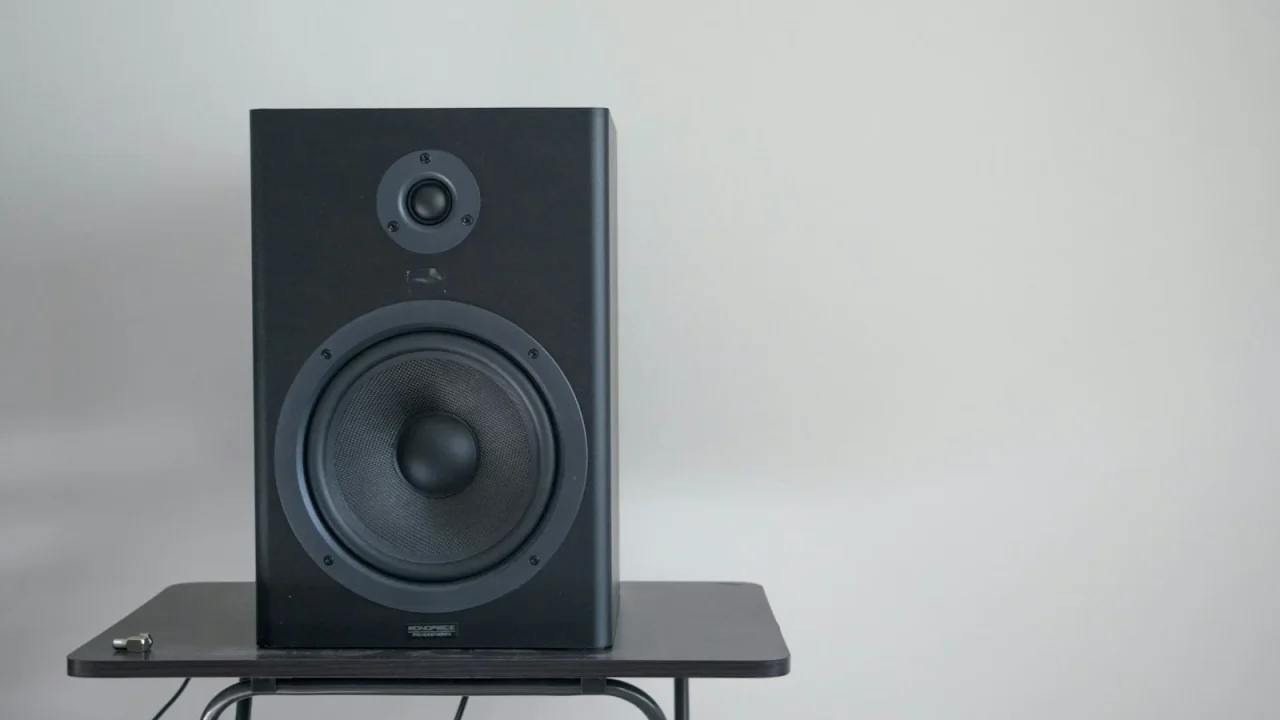
A real center channel speaker, sitting under or above the screen, sends dialogue from one fixed physical location instead of asking two other speakers to fake it. Vocal frequencies, roughly 300 Hz to 3,000 Hz where most speech intelligibility lives, are exactly the range a dedicated center driver and tweeter pairing is tuned to handle cleanly.
Inside a soundbar, the same idea applies on a smaller scale. A bar with a genuinely tuned center channel array, present on models like the Samsung HW-Q990D and the Sony Bravia Theater Bar 9, dedicates specific drivers to that frequency range. A cheaper bar sharing one wide driver array across the whole front stage is closer to the phantom center problem than to a real fix, just packaged inside a single cabinet.
Both Dolby and DTS treat this the same way at the format level, encoding dialogue as its own discrete channel or object rather than leaving it to be reconstructed from two others. The format does its part correctly long before the signal ever reaches a speaker. Whether a real center driver is there to receive it is a hardware question, not a format one.
Why a phantom image falls apart once you leave the sweet spot
Move even 60 to 90 cm off the exact center point between two speakers and the sound from the nearer speaker arrives first, by a matter of milliseconds, ahead of the sound from the further one. The brain locates the source at the nearer speaker rather than fusing the two into a center image, a well documented effect audio engineers call the precedence effect.
The two ends of a sofa are usually 1.5 to 2.5 metres apart, comfortably enough distance for this to break down completely for anyone not in the middle seat. Dialogue does not just get quieter there. It shifts location, sounding like it is coming from whichever front speaker is nearer that seat, which is more distracting than simply losing volume would be.
A dedicated center speaker removes this problem because there is nothing to fuse. The dialogue is genuinely coming from one fixed point regardless of where you sit, the same reason cinemas have used a real center channel behind the screen for decades rather than relying on left and right alone.
What changes in a real living room once dialogue is anchored
The most obvious change is exactly what that sofa full of people needed: dialogue stays clear and correctly located from every seat, not just the middle one. That single fix resolves more real complaints I hear on installs than any equalizer setting or volume adjustment does.
A second, less obvious change is headroom. Once dialogue has its own dedicated channel and amplifier, it no longer competes for the same drivers handling music, effects, and ambience, so a loud action scene can run louder overall without dialogue getting buried underneath it. Dialogue too quiet, effects too loud is frequently a center channel problem wearing a volume complaint’s clothes.
Calibration still matters even with a real center channel present. Seat position changes what you hear in other ways too, and level matching the center channel correctly against the left and right speakers, not just louder or quieter but genuinely balanced, is worth checking with a proper test tone rather than assuming the factory default got it right.
An open plan living room makes the anchoring effect even more noticeable, since dialogue has to survive a kitchen bleeding ambient noise into the same space as well as an off center seat. A center channel doing its job properly is often the difference between subtitles feeling optional and subtitles feeling necessary in exactly that kind of room.
Checking whether your own setup already has this problem
Sit in a normal off center seat, not the exact middle of the room, and play a scene with a single actor speaking clearly against a quiet background. Then move to the exact center seat and play the same scene again.
If dialogue sounds noticeably clearer, more centered, or simply louder in the middle seat than anywhere else, a phantom center is doing the work rather than a dedicated channel, whether that is a stereo pair with no center speaker or a soundbar with a weak center array. If it sounds equally anchored from both positions, the center channel is already doing its job.
A soundbar’s compact width means its own version of this problem is smaller than a widely spaced stereo pair’s, but it does not disappear. Sitting well off axis from a narrow bar still shifts dialogue toward whichever end is nearer, just over a shorter distance than a full width stereo setup.
The upgrade people buy that does not fix it
The instinct once dialogue sounds unclear is to buy a bigger or louder system: a more powerful receiver, larger front speakers, a subwoofer to fill things out. None of that touches the actual mechanism causing the problem, which is a missing or underused center channel, not a lack of overall volume or bass.
I have walked into homes where a customer had already spent 400 to 600 USD on a better subwoofer trying to fix exactly this complaint, only for the off center seats to sound just as unclear as before, now with more bass underneath the same confusion. Channel count on the box tells you whether a center channel exists at all, but not whether it is genuinely doing the work described here rather than being fed a weak or duplicated signal.
The fix is almost always cheaper than the upgrade people reach for first: adding or properly enabling a real center channel, correctly level matched, following the format Dolby and DTS both define at the object and channel level, covered at Dolby’s own technology pages and DTS’s explanation of DTS:X. Soundbar specs that actually matter covers how to check for a genuine center array before buying rather than after noticing the problem at your next dinner party.
Fixing this costs nothing if the hardware is already there and simply misconfigured. Where a genuine center speaker or array is missing entirely, adding one is usually the least expensive change in the whole system that produces the most noticeable difference from the actual seats people sit in.
Questions readers ask about this
It varies by model and price. Bars with a clearly separated center driver and tweeter pairing tuned for speech, common on models like the Samsung HW-Q990D, deliver a genuine center channel. Cheaper bars sharing one wide driver array across the whole front stage lean more on processing, closer in effect to a phantom center than a true dedicated channel.
Not to the soundbar itself, since its internal drivers are fixed at manufacture. This mainly applies to receiver based systems, where adding a genuine center speaker, correctly level matched against the front left and right channels, is one of the more affordable upgrades available and often the one with the largest audible improvement for the money.
Because dialogue and effects sit in different frequency ranges and arrive from a different physical distance than the front left and right channels in most rooms. A center channel set a couple of dB louder than the mains is common practice specifically to keep speech intelligible once explosions and music are also playing at full volume.
Somewhat, since the angle between the listener and each speaker narrows with distance, making the fusion slightly more forgiving off center. It does not remove the problem, and a wide sofa seating several people will still have clearly worse and better seats for dialogue unless a genuine center channel is actually present and correctly set up.
Yes, for that specific type of content. A subwoofer handles low frequency effects well below where speech lives, so it contributes almost nothing to dialogue clarity. A dedicated center channel sits squarely in the vocal range and does the actual work, which is why a household mostly watching dialogue heavy shows should prioritize it over bass extension.

About the author
Rahul Gupta
Rahul Gupta has spent nearly a decade quietly wiring living rooms, testing soundbars in every awkward apartment layout imaginable, and untangling the kind of HDMI handshake problems that make people give up on Atmos altogether. He writes here about what actually works when you get the boxes home—not what the spec sheet promises. If a piece of gear on this site earns a recommendation, it earned it in a real room with real furniture, not a lab.